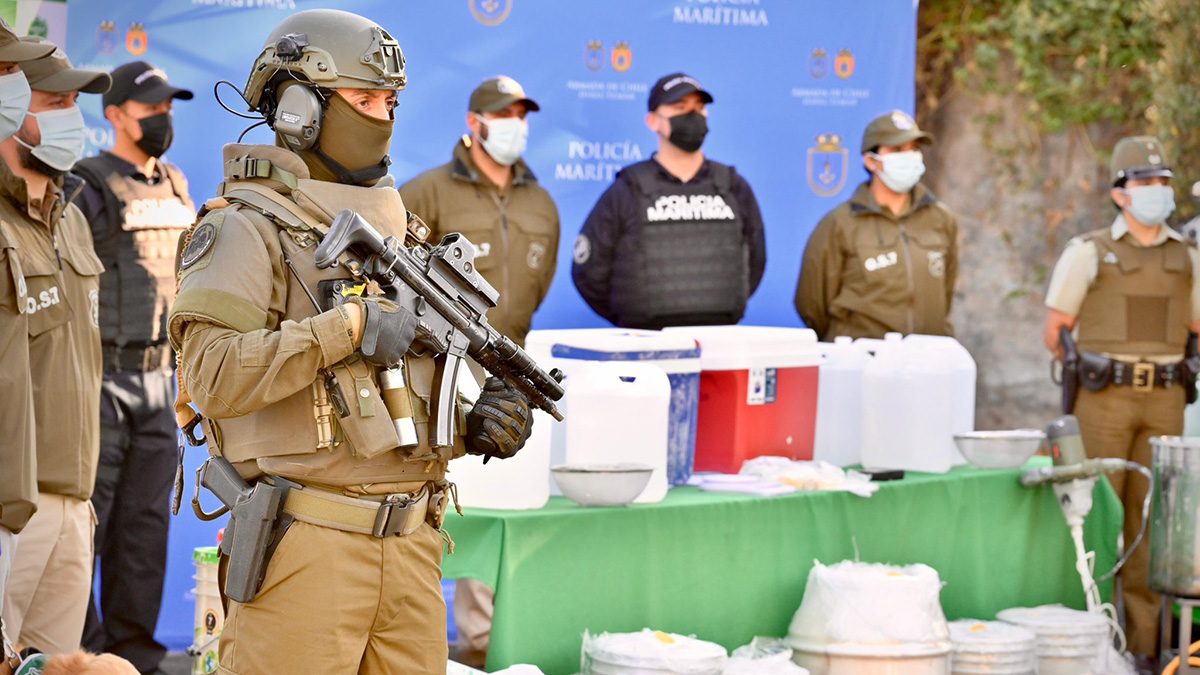
Historic Meth Seizure in Chile Linked to Notorious CJNG Cartel
In a groundbreaking operation that has reverberated across the globe, Chilean authorities recently announced the largest methamphetamine seizure in the country’s history, linking the haul to the infamous Jalisco New Generation Cartel (CJNG). This monumental event marks a significant turning point in the ongoing battle against organized crime in South America, raising serious concerns about the alarming expansion of drug trafficking networks in the region.
The Seizure: A Record-Breaking Operation
Authorities revealed that the operation, which occurred in early October 2023, resulted in the confiscation of over 1.5 tons of methamphetamine. This quantity is not only unprecedented for Chile but also highlights the increasing scale and sophistication of drug trafficking operations within its borders.
The seizure took place in a clandestine lab located in the central part of the country. Reports indicate that the facility was equipped with advanced technology capable of producing high-purity methamphetamine, underscoring the industrial scale of the operation. The police arrested several individuals during the raid, and investigations are ongoing to identify the broader network involved.
The CJNG Connection
The Jalisco New Generation Cartel, known for its brutality and complex operations, has emerged as one of Mexico’s most powerful drug trafficking organizations. Authorities have linked CJNG’s operations in Chile to their growing influence in South America, where they are believed to be expanding their territory and trafficking routes.
Analysts suggest that the CJNG is increasingly looking southward as law enforcement in Mexico intensifies its efforts against drug cartels. By establishing operations in countries like Chile, the cartel can diversify its trafficking routes and reduce reliance on traditional pathways, which are becoming increasingly risky.
Implications for Chile and the Region
This historic meth seizure in Chile raises several red flags regarding the influence of organized crime. The CJNG’s involvement is particularly alarming given its reputation for violence and its ability to corrupt local authorities. The ramifications of this seizure extend beyond just the quantity of drugs confiscated; they highlight a broader systemic issue.
- Increased Violence: As the CJNG seeks to establish its foothold in Chile, there is a potential for increased violence as rival gangs and law enforcement confront the cartel’s aggressive tactics.
- Corruption Risks: The infiltration of the CJNG into local markets poses a significant risk of corruption at various levels of government and law enforcement, undermining public trust and safety.
- Public Health Crisis: The rise of methamphetamine production and distribution can lead to a public health crisis, with increased addiction rates and associated social issues.
Chile’s Response to the Threat
In light of this seizure, Chilean authorities are ramping up their efforts to combat drug trafficking. The government has pledged to strengthen cooperation with international partners, including the United States and other South American nations, to tackle the issue more effectively.
Additionally, Chile is enhancing its intelligence-sharing capabilities to better monitor and disrupt drug trafficking operations. This involves not only law enforcement agencies but also public health organizations that can help address the consequences of drug use in communities.
Regional and Global Context
The situation in Chile is not an isolated incident but rather part of a larger, intricate web of drug trafficking that spans the Americas. The CJNG’s expansion into South America mirrors strategies used by other cartels, which have historically sought to establish operations in regions where law enforcement is less robust.
Countries like Brazil, Argentina, and Colombia have also reported increased activity from Mexican cartels, indicating a regional trend that is troubling for policymakers and law enforcement agencies. The CJNG’s activities are part of a broader pattern of shifting drug trafficking dynamics, with cartels adapting to law enforcement efforts in their home countries.
Community Impact and the Path Forward
The implications of the CJNG’s presence in Chile extend into communities, where the detrimental effects of drug trafficking can be felt most acutely. Increased drug availability often correlates with higher rates of addiction, crime, and social disintegration.
To mitigate these impacts, Chile must adopt a multi-faceted approach that includes:
- Prevention Programs: Investing in education and prevention programs to combat drug use before it becomes a widespread issue.
- Treatment Services: Expanding access to treatment and rehabilitation for those affected by substance abuse.
- Community Engagement: Involving local communities in the fight against drug trafficking to create a united front against organized crime.
Conclusion: A Call to Action
The historic meth seizure in Chile linked to the notorious CJNG cartel serves as a wake-up call for both Chilean authorities and the international community. As the influence of organized crime expands, proactive measures must be taken to protect public safety and health. The fight against drug trafficking is a complex battle that requires concerted efforts at local, national, and international levels.
As Chile navigates this challenge, it has the opportunity to strengthen its institutions, engage its communities, and foster international cooperation. While the road ahead may be fraught with challenges, it also presents a chance for Chile to emerge as a leader in the fight against organized crime in South America.
See more ABC News Feed


