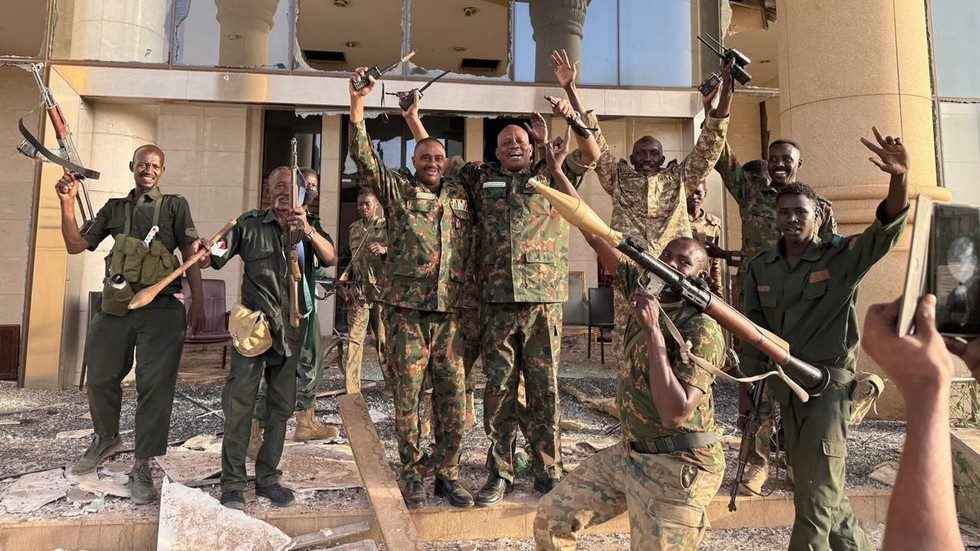
Inside the Reclamation: Sudan’s Army Seizes Control of the Presidential Palace
In a dramatic turn of events, the Sudanese army has successfully reclaimed the presidential palace, marking a significant moment in the nation’s ongoing power struggle. This pivotal moment has captured the attention of both domestic and international observers, who are keen to understand the implications of this military takeover on Sudan’s future. As tensions rise and the stakes increase, the situation warrants a comprehensive analysis of the current landscape in Sudan.
The Background of Sudan’s Power Struggle
Sudan’s political landscape has been tumultuous for decades. Following the ousting of longtime dictator Omar al-Bashir in April 2019, the country has experienced a fragile transition toward democracy. However, this transition has been marred by conflict between military and civilian factions vying for power. The transitional government, which was formed as a partnership between military leaders and civilian representatives, has struggled to maintain stability amid rising economic difficulties and social unrest.
The recent seizure of the presidential palace by the military is a clear indication of the escalating power struggle. The army’s actions have drawn both support and condemnation from various segments of Sudanese society and the international community. As the situation develops, it becomes crucial to dissect the motivations behind the military’s move and its potential repercussions.
The Moment of Seizure: What Happened?
Reports indicate that the army’s takeover occurred in the early hours of the morning, catching many by surprise. Soldiers swiftly moved to secure key areas of the capital, Khartoum, including the presidential palace, which serves as the seat of power in Sudan. Surveillance footage from the scene depicts a chaotic atmosphere, with armed forces patrolling the streets and civilians expressing a mix of fear and defiance.
- Military Strategy: The army’s strategy appears to have been well-coordinated, with forces deployed strategically across the city to prevent any immediate resistance.
- Public Reaction: Social media has been flooded with reactions, ranging from support for the army to calls for civilian governance. The dichotomy in public sentiment highlights the polarized nature of Sudanese society.
Implications for Sudan’s Future
As the dust settles on this significant military takeover, the implications for Sudan’s future are profound. The army’s control of the presidential palace could lead to several possible scenarios:
- Increased Military Influence: With the army seizing control, there is a risk of a return to military dominance in Sudan’s political sphere, potentially undermining the progress made towards civilian governance.
- Civil Unrest: The takeover may provoke widespread protests from civilians who demand a return to democratic processes. Such unrest could lead to further instability, affecting the daily lives of ordinary Sudanese citizens.
- International Response: The international community’s reaction will be pivotal. Countries and organizations that have supported Sudan’s transition to democracy may impose sanctions or diplomatic measures in response to the military’s actions.
The Role of Key Figures
Understanding the key figures involved in this power struggle is essential to grasp the full picture of the situation. The military is led by General Abdel Fattah al-Burhan, who has emerged as a pivotal player since the ousting of al-Bashir. His decisions will likely shape the direction of Sudan’s governance in the coming months.
On the other hand, civilian leaders, including Prime Minister Abdalla Hamdok, have been vocal advocates for a democratic Sudan. The balance of power between these figures will play a critical role in determining the nation’s trajectory. If the military continues to exert control, Hamdok and his allies may find themselves marginalized, leading to a potential crisis in governance.
International Perspectives and Reactions
The international community has closely monitored the developments in Sudan, with various governments and organizations expressing concern over the military’s takeover. The African Union and United Nations have both called for a return to civilian rule, emphasizing the importance of dialogue and negotiation in resolving the crisis.
Countries with vested interests in Sudan, such as Egypt and the Gulf states, may take different stances based on their strategic interests. While Egypt has historically supported military regimes in the region, other nations may push for a more democratic approach in order to foster stability and development in Sudan.
The Path Forward: Hope Amidst Uncertainty
Despite the challenges that lie ahead, there remains a glimmer of hope for Sudan. Civil society groups, youth movements, and grassroots organizations have shown remarkable resilience and determination in advocating for democratic reforms. Their voices will be crucial in shaping the future of Sudan as they seek to hold the military accountable and push for a return to civilian governance.
Moreover, the international community’s engagement can play a significant role in supporting Sudan’s transition. Diplomatic efforts, coupled with economic assistance aimed at rebuilding the nation, may help stabilize the situation and promote long-term development.
Conclusion
The reclamation of the presidential palace by Sudan’s army is a watershed moment in the country’s ongoing power struggle. As Sudan grapples with the implications of this military takeover, the future remains uncertain. However, the resilience of its people and the potential for international support offer a framework for hope amidst the challenges. It is essential for all stakeholders, both within Sudan and beyond, to prioritize dialogue and work collaboratively towards a peaceful resolution that honors the aspirations of the Sudanese people for democracy and stability.
As we move forward, the world watches closely, hoping for a resolution that brings about a brighter future for Sudan, one that reflects the will of its citizens and the principles of democracy.
See more ABC News Feed