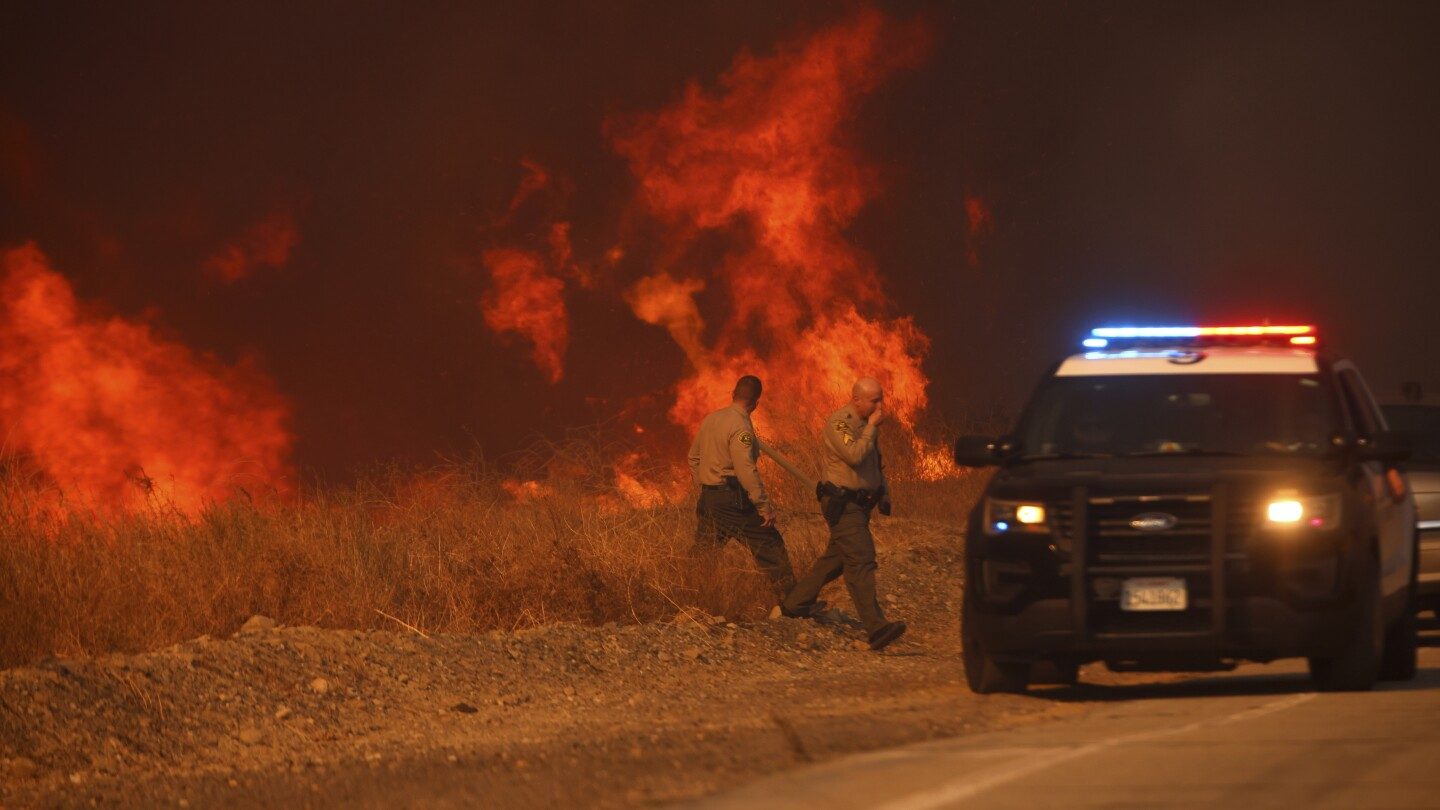
Unyielding Blaze: Firefighters Strive for Control in Northern Los Angeles
As flames rage in the hills north of Los Angeles, firefighters face a relentless battle against a massive wildfire. This ongoing struggle raises questions about fire management and community safety in the region. The recent wildfire has not only tested the resilience of the firefighters but has also highlighted the urgent need for effective strategies in dealing with such natural disasters. With the landscape of Northern Los Angeles being particularly susceptible to wildfires, understanding the dynamics involved in firefighting efforts becomes imperative.
The Current Situation: A Firefighter’s Perspective
Firefighters on the front lines are experiencing firsthand the challenges posed by the current wildfire. The terrain, characterized by steep hills and dense vegetation, complicates firefighting efforts. Fire Chief Maria Gonzales, who has been leading operations in the area, notes, “The conditions are incredibly challenging. We have to navigate rugged terrain while dealing with unpredictable wind patterns that can spread flames rapidly.”
As the wildfire continues to burn, firefighters are employing various strategies to combat the flames. These include:
- Direct Attack: Firefighters are working to suppress the fire directly by using water and fire retardants.
- Indirect Attack: Creating firebreaks by removing vegetation to prevent the fire from spreading further.
- Aerial Support: Utilizing helicopters and planes to drop water and retardants from above.
Despite their best efforts, the unyielding blaze poses a significant threat to both lives and property. The emotional toll on firefighters is substantial, as they witness the destruction of homes and the displacement of families. “Our primary goal is to protect lives and property,” Chief Gonzales emphasizes. “Each structure we save is a testament to our dedication.”
The Impact on the Community
The wildfire’s reach has not only endangered wildlife habitats but also put local communities at risk. Mandatory evacuations have been ordered for several neighborhoods, with residents forced to leave their homes at a moment’s notice. The uncertainty and fear surrounding such events can lead to significant emotional distress among community members.
Local resident Sarah Johnson shared her experience during the evacuation: “It was terrifying to think we might lose our home. We packed what we could and left in a hurry, not knowing if we’d return to find everything intact.” Community support networks have sprung into action, providing shelter and resources for those displaced by the flames. This solidarity underscores the strength of community ties in times of crisis.
Understanding Fire Management Challenges
The wildfire situation in Northern Los Angeles prompts a broader discussion about fire management practices. As climate change continues to influence weather patterns, the frequency and intensity of wildfires are expected to increase. This reality calls for a reevaluation of existing fire management strategies.
Key challenges in fire management include:
- Resource Allocation: Ensuring that firefighting resources, including personnel and equipment, are adequately distributed to meet the demands of large-scale fires.
- Public Awareness: Educating communities about fire safety and preparedness to minimize risk.
- Forest Management: Implementing controlled burns and vegetation management to reduce fuel loads in fire-prone areas.
Experts argue that proactive measures are essential in mitigating fire risks. Dr. Emily Carter, a wildfire researcher, states, “We need to focus on prevention rather than just response. Investing in forest management and community education can significantly reduce the likelihood of devastating wildfires.”
The Role of Technology in Wildfire Management
In recent years, technology has played an increasingly important role in wildfire management. Drones equipped with thermal imaging cameras are now being used to detect hot spots and assess the fire’s progression. This allows firefighting teams to make informed decisions based on real-time data.
Moreover, satellite imagery provides crucial insights into fire behavior and spread patterns. These technological advancements enable firefighters to strategize more effectively, ultimately enhancing their ability to control wildfires. “The integration of technology into our firefighting efforts has been a game-changer,” says Chief Gonzales. “It helps us anticipate fire movements and allocate resources more efficiently.”
Looking Ahead: Building Resilience
As the firefighting efforts continue in Northern Los Angeles, there is hope for recovery and resilience. Community leaders are already discussing long-term strategies to bolster fire preparedness. These might include:
- Community Fire Workshops: Organizing educational events to teach residents about fire safety and emergency preparedness.
- Enhanced Forest Management Practices: Collaborating with environmental organizations to implement sustainable land management strategies.
- Investment in Infrastructure: Improving access roads and water supply systems to better support firefighting efforts.
It’s crucial to foster a culture of readiness, where communities are equipped to respond effectively to wildfires. This not only protects lives but also preserves the natural beauty of the region.
A Call to Action
The unyielding blaze in Northern Los Angeles serves as a sobering reminder of the challenges posed by wildfires. However, it also highlights the incredible bravery and dedication of firefighters who put their lives on the line to protect their communities. As we navigate this ongoing crisis, it’s essential for local governments, organizations, and residents to come together to address the underlying issues of fire management and community safety.
In conclusion, while the battle against the flames continues, there is hope for a more resilient future. Through collaboration, education, and proactive measures, we can work towards a safer environment for all. The story of this wildfire is not just one of destruction; it is a testament to the strength of community, the dedication of firefighters, and the urgent need for effective fire management strategies.
See more ABC News Feed